
Cross-posting this May update, including a written update from Operation Broken Silence (source) and a video from To Move Mountains, a Christian educational organization in the Nuba Mountains, South Kordofan, Sudan (source):
Throughout the month of May fighting between the army and Rapid Support Forces (RSF) continued largely along the same frontlines as it has for much of this year. The international community announced more humanitarian aid deliveries even as drone strikes surge.
Meanwhile, Sudanese heroes continue saving and changing lives, including some we help to support. Thank you for supporting them. Now for the news.
With the frontlines still largely stalemated in Sudan, drone strikes by the army and RSF continue to accelerate. In a statement on May 11, UN Human Rights Chief Volker Türk said his office has accounted for at least 880 civilian deaths from drone strikes between January and April of this year.
That’s roughly 80% of all confirmed conflict-related civilian deaths this year. It’s worth noting that a firm death toll in the war remains unknown, as many areas of Sudan are still difficult or impossible to access. It is generally assumed that the estimate of 150,000 dead, which has been around for more than two years, is a substantial undercount.
Türk says that “Armed drones have now become by far and away the leading cause of civilian deaths.”
 Map: Rough approximation of May frontlines in Sudan. Pins mark locations of heaviest fighting. |
The above map showing territorial control hasn’t changed much this year, even after several rounds of mostly failed offensives by both the army and RSF. Drone warfare has become a relatively cheap and easy way for both sides to strike deep behind frontlines and even target one another’s leadership. In early May, a RSF drone strike reportedly targeted a prominent RSF defector southeast of Khartoum, killing several of his family members. Several senior RSF leaders also narrowly survived an army drone strike in Nyala, South Darfur in mid-May.
Both sides have hit civilian areas with drones, including a RSF drone strike on Khartoum International Airport earlier this month.
Türk is calling for the international community to do more to prevent the transfer of armed drones into Sudan. “Drone attacks against civilians and civilian objects will only worsen if they are met with utter impunity, with this violence being increasingly normalized as a go-to tactic by both parties,” he said.
The United Nations says most of the civilian deaths attributed to drone strikes in the first quarter of 2026 were recorded in the Kordofan region, which is the main frontline between the army and RSF. But as both sides continue ramping up their use of drones and become more sophisticated with their strikes, very few areas in Sudan are now considered to be truly safe from the war.
The situation in Sudan is hard, but good people everywhere are helping. Here are some recent highlights from May and ways you can join us:
1. With your help, we sent $44,450 to Sudanese heroes. These funds are being used to deliver emergency food, medicines, and other supplies and to provide counseling services to those in need.
2. Local healthcare workers in Adré, eastern Chad continue saving and changing lives every week. Learn more about their heroic efforts.
3. 89 participants have joined Miles For Sudan! This is one of the best ways to aid heroes on the ground. Getting your page up and running only takes a minute [and it matches up perfectly with June’s We Choose Welcome Walk in Solidarity challenge].
5. Our Sudan Crisis Guide educated over 800 people this month and has just been updated. We encourage you to share it online to help raise awareness about Sudan’s ignored crisis.
6. If it has been a while since you’ve made a donation, now is a great time! You can give quickly online or mail a check made payable to Operation Broken Silence to PO Box 770900 Memphis, TN 38177-0900.
The regional war in the Middle East has begun compounding humanitarian and diplomatic challenges in Sudan. Foreign Policy Magazine says that with so many countries focused on events around Iran and the Strait of Hormuz, what little diplomatic attention being paid to Sudan has further reduced.
“The Iran war’s disruptions to supply chains have brought the global humanitarian delivery pipeline to its knees. More than $130,000 in pharmaceutical supplies bound for Sudan were stranded in Dubai in late March, while lifesaving medical shipments for more than 400,000 children were delayed. According to the U.N. Refugee Agency, the costs for some relief shipments have more than doubled…
Simply reopening the Strait of Hormuz now won’t fix the crisis. The war in Sudan had already decimated agricultural output in what was known as the breadbasket of Africa. In 2024, Sudan imported 54 percent of its fertilizer from the Persian Gulf, leaving it highly vulnerable to maritime disruptions.
Global prices of urea, a nitrogen-based fertilizer, surged by nearly 99 percent year-to-date in April. The damage is already done: When planting for Sudan’s fall harvest begins in June, farmers are already likely to reap little in return.”
The United Nations also says that the Iran war has disrupted shipping routes, driving up the costs of food, fuel, and fertilizer that Sudan imports. UN Emergency Relief Coordinator Tom Fletcher says “Fuel prices have already increased by over 24 per cent on average. In some remote areas, much more than that”
As long as this war drags on, more countries run the risk of being sucked into the fighting as violence threatens to pass over national borders. The primary worry has been neighboring Chad, where hundreds of thousands of Sudanese refugees now live and cross border attacks by the RSF have occurred. Militias allied to the Sudanese army have also used Chadian territory to skirt the frontlines in western Sudan and strike into RSF-held areas. A newer concern has to do with Ethiopia though. Radio France Internationale has this summary of emerging evidence that Ethiopia is providing limited support to the RSF.
Fighters affiliated with the RSF have killed at least 27 people, including elderly residents, in an attack on villages near Bara in North Kordofan state, according to the Sudan Doctors Network.
A team of Reuters journalists has published a series of interviews and photos featuring survivors of the genocide in El Fasher last October. This is the kind of critical journalistic work that has been missing for much of the war and it’s worth your time to read and share.
A new report from Human Rights Watch documents the presence of Columbian mercenaries fighting alongside the RSF in Sudan. HRW says that “since 2024, an Abu Dhabi-based security company–which is licensed to work for the Emirati government and has links to the ruling family and senior United Arab Emirates (UAE) officials–has appeared to hire Colombian private military contractors (PMCs) who were deployed to Sudan to fight alongside the RSF.
Speaking to Middle East Eye, Sudanese army chief al-Burhan has said he is willing to open talks with the United Arab Emirates, as long as certain conditions are met, including the UAE ending its support of the RSF.
The Christian Council of Norway is expressing dismay over the severe underreporting of the situation in Sudan in the Norwegian media. “We cannot accept that this is happening on our watch,” the statement reads. “Every human being is created in the image of God and has inviolable worth.”
We know updates like these are difficult. But Sudan’s future is still being written. With your help, it can be a brighter one. Now is a great time to sign up or recommit to Miles For Sudan or make a donation.
Our Sudanese partners appreciate your support and we couldn’t be more grateful to have you with us. Talk to you soon.
Fighting in the Nuba Mountains — Watch an urgent update from To Move Mountains Co-Founder, Ryan Boyette HERE.
Please join them in prayer during this extremely challenging time.
MORE FROM SUDAN
Azmi Never Made it Home
A mother should not have to choose between being unable to feed her children in displacement and returning them to a conflict-affected area. Read Amzi’s story and stand in practical solidarity with Sudanese families needing a lifeline.
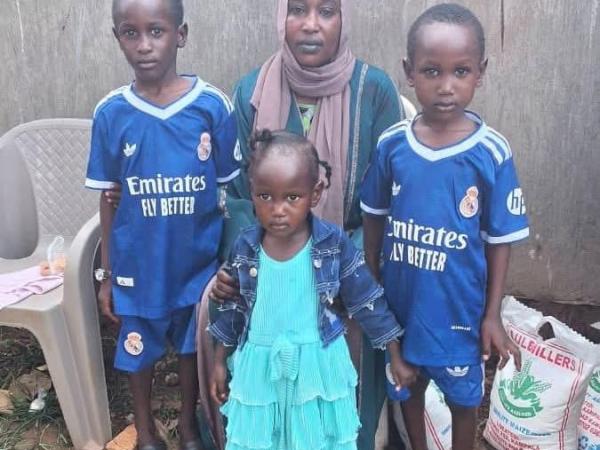
Sarah’s Story: Get to Know One Beneficiary of TRAID’s Food Distribution Program
Sarah’s experience is personal, and it should not be assumed that every Sudanese person experiences war in the same way. But her story sits within a much wider crisis affecting women and girls across Sudan.
#Sudan #KeepEyesOnSudan #Refugees #IDPs #Women
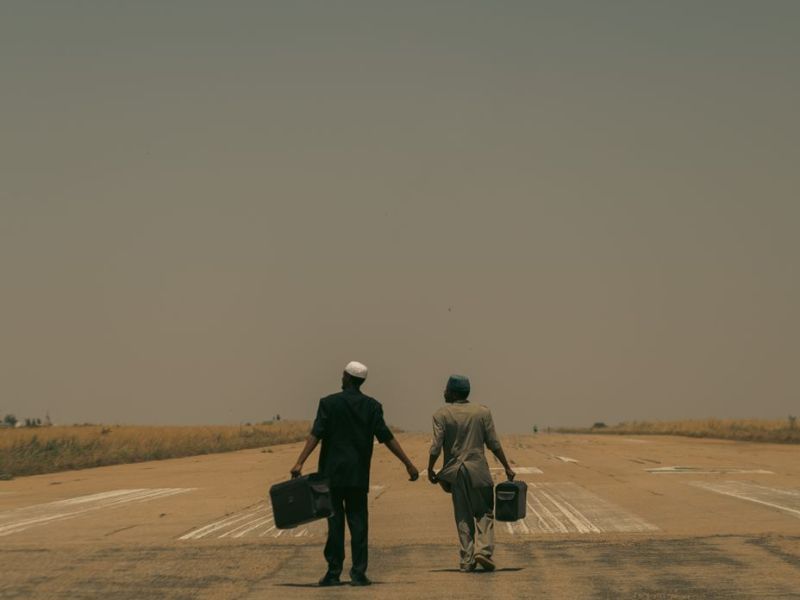
#WalkinSolidarity2026, June 29-30
Though I surpassed my goal of walking 5 kilometers per day in June, the 162 kilometers I walked was only 8% of the journey from Nyala, Sudan to Mukono, Uganda that 13 year old Khamis* and his family took to survive.
We did not reach the goal of raising $4,000 USD for July food distribution…
Something went wrong. Please refresh the page and/or try again.


Leave a Reply