
(*This page is updated periodically with action items and resources*)
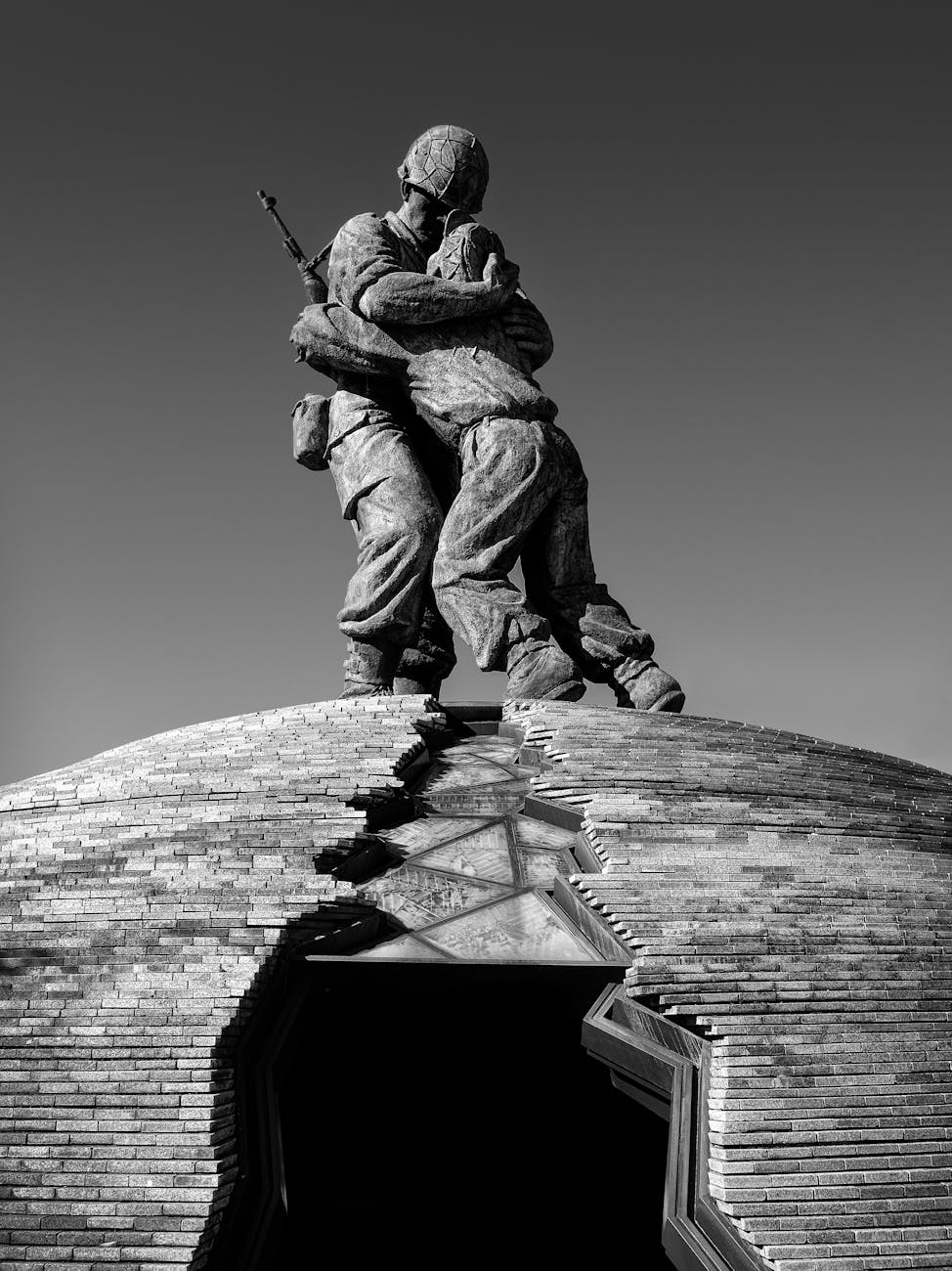
The Korean people have a 5,000 year history, marked by a grievous period of Japanese colonization from 1910-1945. In 1919, the Korean people started the struggle for independence from Japan and began preparing for self-rule. To their dismay, liberation from Japan in 1945 did not mean sovereignty for the Korean people, but instead division of the Korean homeland and military occupation by foreign powers. At the end of World War II, the United States and the USSR split the Korean peninsula in half – drawing an arbitrary line across the 38th parallel without even consulting Korean people. The next tumultuous years were marked by land reforms, political power plays, troops from both sides regularly skirmishing across the 38th parallel, human migration, and over 100,000 people extra-judicially killed over ideology in South Korea. Both leaders in South and North sought foreign military aid to forcibly reunite Korea, leading to the outbreak of war on June 25th, 1950.
Three years of brutal warfare decimated the peninsula-especially the North, where a massive US bombing campaign destroyed every city and exterminated 800,000 civilian lives. The violence failed to reunite Korea, and the 1953 armistice did not end the war, instead creating a militarized division line. The armed truce left wartime rights to use force in place, US military supremacy in South Korea (the US military still has operational control of the South’s military in wartime), and constant fear of renewed violence. These realities have been used to justify military governments, harsh wartime laws, and increasing militarization in both North and South. Therefore, the current nuclear tensions and human rights concerns in Korea are a symptom of the unended Korean war, not the cause. The legal structure of the armistice is such that a peace agreement cannot be negotiated between North and South Korea independent of the United States’ participation (fact sheets). Therefore, we must cultivate political will among American leaders to end this “forgotten war.” It is long past time for the Korean people to have the peace and sovereignty they need to determine their own future.
Please take action to call for peace in Korea and learn more about the history and ongoing impacts of the Korean war through the links below:
📣 CALL FOR PEACE
- 🇺🇸 Write to your U.S. Congressperson
- Support the Peace on the Korean Peninsula Act (H.R. 1841)
- You can send repeat emails regularly, and we encourage you to call your Representative in the House as well.
- ✍️ Sign the Korea Peace Appeal (Global Campaign)
✍️ 한국 전쟁 종전과 평화를위한 서명해 주세요
🎬 TAKE ACTION
- Write an op-ed about the need to end the Korean War
(Submit near a significant date/a good news hook) - 🙏 Repent for US’ Sins in the Korean War
(prayer for use at vigils or house of worship) - 🎞 Host a Documentary Screening
(email Jennie to discuss films, audience, and logistics)
LEARN MORE
📚 Join the Korea Peace Study Group
📄 FACT SHEETS FOR ADVOCACY & IMPACTS OF THE UNENDED WAR
- 📄 Why The Armistice Should be Replaced with a Peace Agreement
📄 정전협정을 평화협정으로 대체해야 하는 이유 - 📄 The Implications of a Peace Agreement for Denuclearization
📄 평화협정이 비핵화에 미치는 함의 - 📄 The Implications of a Peace Agreement for Human Rights
📄 평화협정이 인권에 미치는 함의 - 📄 The Implications of a Peace Agreement for US-ROK Relations
📄 평화협정이 한미관계에 미치는 함의 - 📄 Women and the Korea Peace Process
📄 여성과 한반도 평화 프로세스 - 📄 Recommendations: The Korea Peace Process
📄 한반도 평화 프로세스의 성공을 위한 제안 - 📄 Why the U.S. Should End the Travel Ban to North Korea
- 📄 Human Rights in North Korea
- 📄 Killer Robots and South Korea
📄 REPORTS ON IMPACTS OF THE UNENDED WAR
- 📄 Path to Peace: Case for a Peace Agreement in Korea
- 📄 Human Costs of Sanctions on North Korea
- 📄 Women’s Rights Under the Korean Division System
📖 BOOKS
- 📖 The Korean War: A History and other books by Bruce Cumings
- 📖 It Tastes Like War: A Memoir and other books by Grace M. Choi
- 📖 Quest for Peace: A Memoir by Han S. Park
- 📖 DMZ Colony and other books by Don Mi Choi
- 📖 Human Acts by Nobel Laureate, Han Kang
- 📖 The First Amerasians by Yuri W. Doolan
🎞 DOCUMENTARIES
- 🎞 Haewon, testimonies of massacres in South Korea before the war
- 🎞 Korea: The Unknown War, 6 part PBS documentary (1990)
- 🎞 Tiger Spirit, 2008 film about divided Korean families
- 🎞 History of Inter-Korean Catholic Exchanges
- 🎞 My Brothers and Sisters in the North, everyday life in North Korea
- 🎞 Insight Into North Koreans, stories about North Korean people
- 🎞 South Korea’s Adoption Reckoning, part of the international, living legacy of the Korean War and US military occupation of Korea
🎞 FILMS
- 🎞 Ode To My Father, popular film depicting the experiences and emotions of one Korean man from the 1950s to the new millenium
- 🎞 Jiseul, on the Jeju Massacre by US military order before the war
(Although the South Korean government has acknowledged this dark history, the US Government has never apologized for this.)
ACADEMIC LECTURES
- 🎞 How the Korean War Changed the US Government and Military
(Congress ceded war powers to President; began the “cold” war; inaugurated military industrial complex/permanent military mobilization; expanded military budget; first forever war; sets stage for future wars – like Vietnam) - 🎞 Korean War: A History, by Bruce Cumings
- 🎞 2017 Korea Peace Network Conference
- 🎞 70th Anniversary of the Armistice Conference
📰 KOREA POSTS
Women and War: Militarism & Camptowns in South Korea, 1/26 @ 8:30 pm ET
In this webinar, organizers and scholars will discuss the history of camptowns, human rights abuses against Korean women, and how Korean women are fighting for justice. Featuring Ko Mira, director of Sae-oom-teo, and human rights lawyer Ha Ju Hee, in a conversation moderated by Professor Ji-Yeon Yuh.
Faith, Peace, and Power Across Contexts: Uganda, Palestine, and Korea
What does it mean to follow Jesus when faith is used to justify domination, nationalism, or exclusion? And how might Christians embody a different way—the way of peace, solidarity, and hope? Three Peace Catalyst team members, rooted in very different contexts, discuss these topics in this webinar.

Dangerous Women: Gender & Korean Nationalism, part 2
In the December 2025 session of the Korea Peace Study Group, j. eunsun and June Nho Ivers presented on a book titled Dangerous Women: Gender & Korean Nationalism, edited by Elaine H. Kim and Chungmoo Choi. Watch the recording here.
Dangerous Women Part 2, 12/12 @ 8 pm ET
You’re invited to our December Korea Peace Study Group session this week where June & Eunsun will give the second part of their presentation on “Dangerous Women: Gender & Korean Nationalism,” a book edited by Elaine H. Kim and Chungmoo Choi.

Send One Korea Peace Email Before 2025 Ends
The US Congress is going to close shop on December 19th. Before they head home for the holidays, will you take a moment to send one email for Korea Peace?

Veteran Catholic aid worker warns sanctions deepen suffering in isolated North Korea
A Catholic Swiss aid worker with three decades of on-the-ground experience in North Korea has warned that international sanctions are worsening the hardship of ordinary citizens, even as the country remains sealed off from nearly all humanitarian access.
Something went wrong. Please refresh the page and/or try again.

 Seeds Will Grow
Leave a comment