
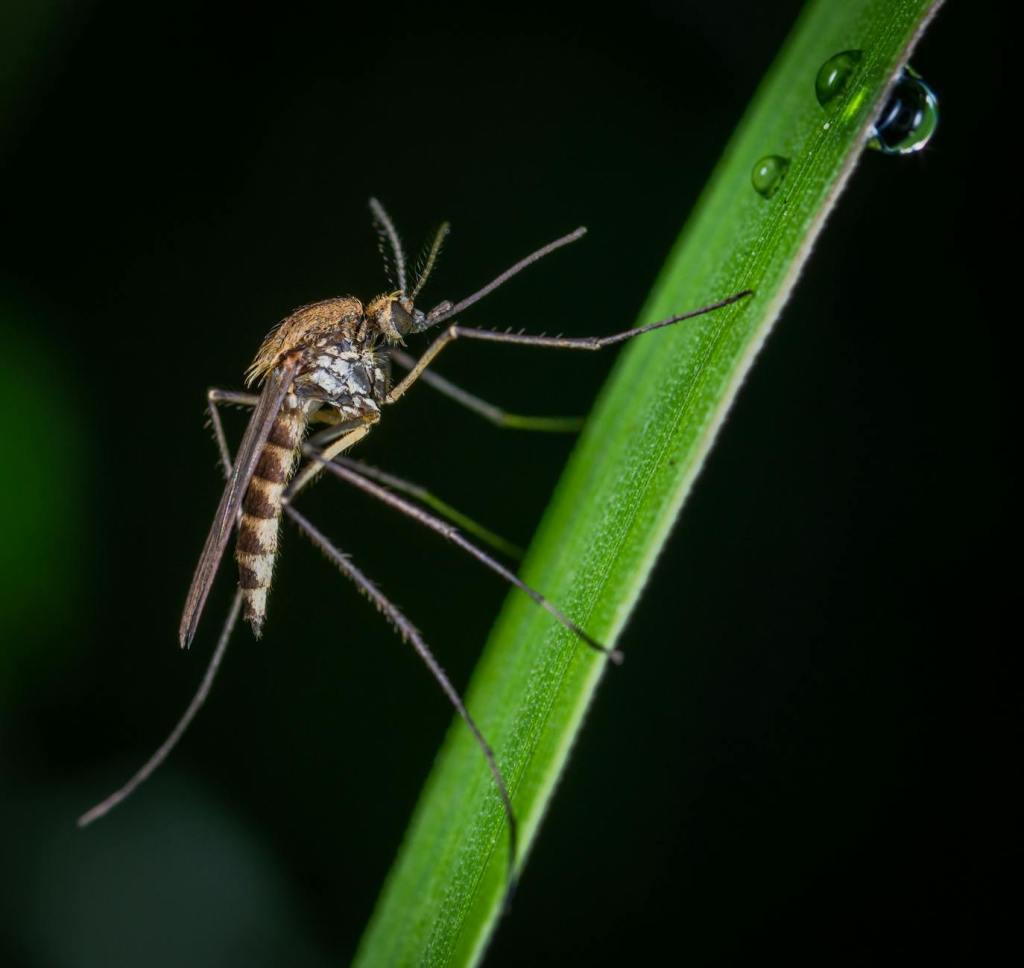
Cross-posting this essay by my Peace Catalyst colleague Kirsten Schlewitz, because malaria has always made me wonder, “Why mosquitos?” (source).
The gift of the bloodsuckers
On birdsong, avocado toast, and not having to put out the fires of this world alone.
By KIRSTEN SCHLEWITZ
MAR 31, 2025
When I was around 13 years old, our new next-door neighbor came by with an unusual request: Did we mind if she built a birdhouse in her backyard? I’m not sure how someone could say no to that—my parents certainly seemed bemused—or even why they would want to deny an elderly lady the right to keep some birds around for company. Come June, the summer before I started high school, I realized exactly what the issue was: birds are loud. Especially parrots (I guess the fact that this woman walked around with a parrot perched on her shoulder should’ve been a clue as to the fact that she was building a full-on mansion for squawkers, rather than an adorable cabin providing seed and shelter for wayfaring birds). And when the dawn starts breaking before 5am and you’re already a hormonal teenager staying up past midnight to listen to Mellon Collie and the Infinite Sadness on repeat . . . well, I came to despise birds.
It probably didn’t help that I was attacked by a goose as a small child, either. (Yes, Mom. It happened. You’re the one who sent your young daughter off alone to stay with your two younger brothers, whose child-rearing approach could best be described as “experimental,” every summer. I’m amazed I’m alive, honestly.) I also absorbed everything my grandmother did, and that woman loved nothing more than to sit on her back deck and curse at the crows (probably why she never noticed her sons timing how fast I could fly down the driveway in her wheelchair, or testing if I could swim by dropping me into a glacial lake). Birds were fearsome creatures, objects of wrath.
Just to clarify: I’ve never intentionally caused physical harm to a bird of any sort.
Unintentionally, well . . . we take care of what we love, do we not? But that which we don’t see, or walk past unblinking, or quickly scroll past, or put headphones on to ignore . . . that we can harm with our apathy. That which we find unworthy of attention becomes a person without a home to shelter in, one taken by the bank or an earthquake or a wildfire or untreated mental illness, or someone forced out of to return to a home that’s not safe, or a home destroyed by a bomb or a missile or a drone attack.
A bird without its forest, or its wetland, or its sandy shore.
They are intertwined, caring about social problems and caring about ecological impacts. A consumerist mindset that prizes accumulation above all else results in the devastation of environments that nurture not only flora and fauna, but provide food and water to human creatures as well. And when humans are without food and water, they encroach on other environments, pushing out the plants and animals residing there. The pattern keeps repeating and expanding, resulting in things like fires and floods, climate migration and species extinction.
During our monthly Peace Catalyst meeting, we discussed what had made us happy over the last few days. Nearly all of us mentioned birdsong. My colleague Steve then revealed his theory: you know you’re hitting middle age when you start appreciating the sounds of birds; you know you’re officially there when you’re wondering which bird sings which song.
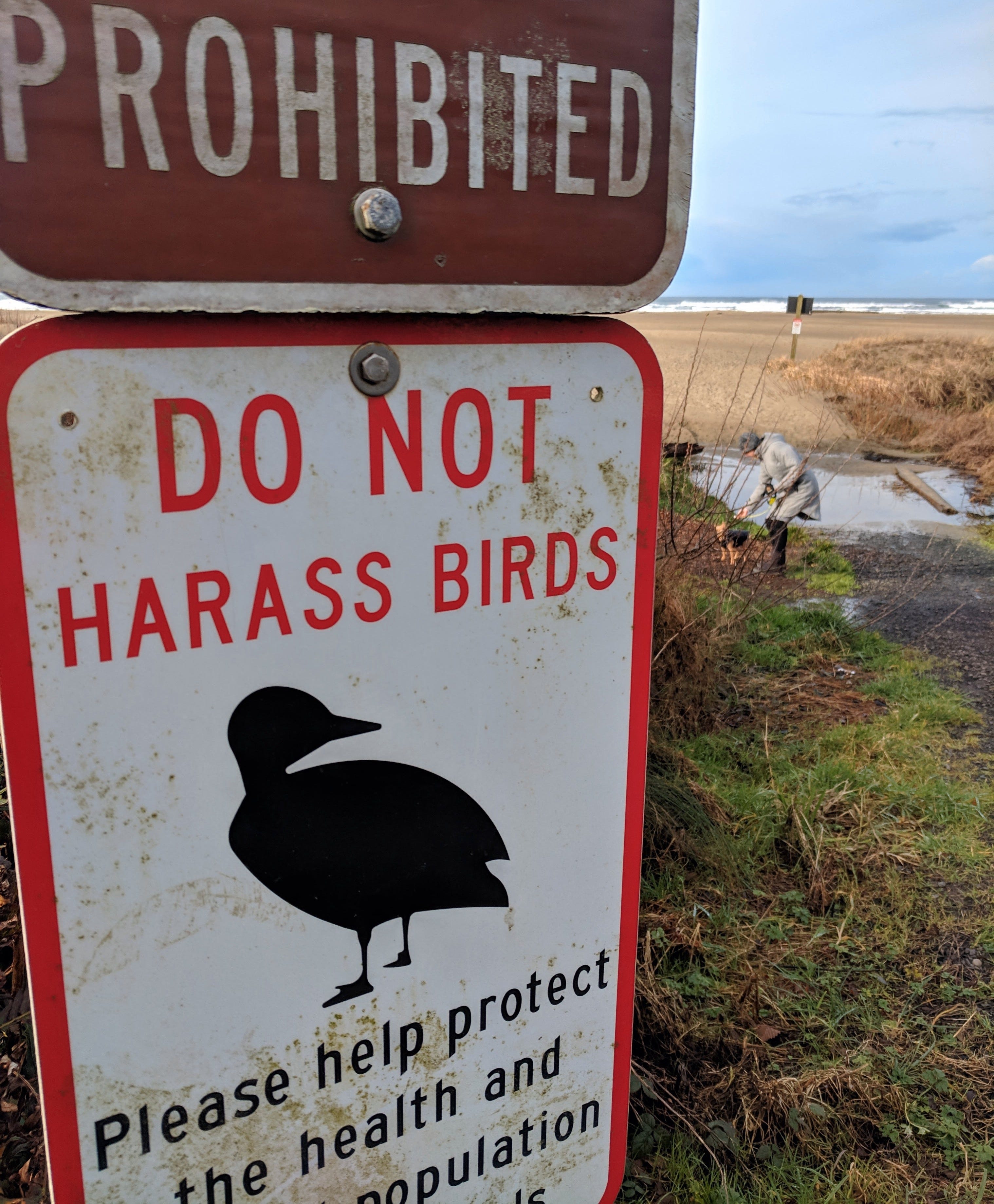
And, as I’ve learned myself, when you know which birds are nearby, and you’re cheered by their warbles and trills, you’re far more likely to want to protect them. Even if you live in a small apartment, you might plant a few containers with red, orange, and/or white flowers, near a shallow dish filled with rocks and pebbles where the birds can stop for a drink. You might learn that birds could use supplemental food year round—especially after heavy rains or during a period of drought—and upcycle a plastic bottle and those old chopsticks buried in the silverware drawer into an easy bird feeder that even your children could make (and in having them help, they might not grow into teens who bitch about birds like some of us did). And while paying attention to the birds can lead you to make decisions that help on an individual level, becoming a citizen scientist—tracking and contributing your findings—advances research and promotes larger conservation efforts. Cornell even has a free online class to bring you into a virtual global community to better love and protect birds.
But—childhood traumas notwithstanding—birds are pretty easy to care about. The bubbly chirp of a house wren, the graceful swoops of a swallow, the quiet mystery of an owl, the majestic appearance of a bald-headed eagle . . . with a little attention, people don’t need much convincing. What, though, of the rest of this animal planet?
In his recent book Creation Care Discipleship, Steven Bouma-Prediger opened my eyes to the Book of Job, one that most of us don’t pay much attention to, having been taught that its basic message is to trust God, even when life seems unfair. But what if its last few chapters (38–42) can teach us what it means “to be human in the world”? In asking Job if he can feed a lion, or teach a hawk to soar, or capture a hippopotamus, God is reminding him (and us!) that we are not the center of creation. It is a relationship, this world, between the Creator, the human, and the plants and animals, air and water, and the human cannot make himself the focal point. That also requires revering not only that which we find adorable, or charming, or beautiful, or pleasing to the ear, but also that which is slimy, or hostile, or menacing, or downright revolting. God nurtures the Bemouth and the Leviathan; ergo, so must we.
Advocating for ecological justice in this dismal, terrifying world where we need to stop unfair imprisonment and governments rewriting history and the mass deaths of hundreds of thousands is already difficult, but even with God on my side, I was pretty skeptical about getting others to care about protecting things like giant squids. But then I read about the importance of mosquitos—the one animal I’d always questioned God having made, given how much they enjoy supping on my sweet, sweet blood. I learned that a bat can eat up to 300 mosquitos and other insects per hour. Now, you might argue that we don’t need bats either, given their tendency to get tangled in people’s hair and sometimes turn into vampires. But without bats, we wouldn’t have the saguaro cactus, cacao, or avocados.
I’ve always felt that love of the Creator should lead to love of all that is created . . . in the abstract, anyway. We Lutherans know that God is in, with, and under all that is; therefore, all that is deserves love, to be treated with respect, to be granted dignity. But those mosquitos, my dude. Those mosquitos. It took realizing that if bats went hungry, I would never again have avocado toast to understand that I need to find a way to live in peace with mosquitos, too.
Every morning when I check my newsfeeds, I’m once again filled with fear, with sadness, with rage. It seems counterintuitive to find one more thing to care about—especially when that thing is a mosquito. But deep, dark chocolate makes me happy. Cacti decorated as Christmas trees make me happy. Tugging at that thread, I can plant herbs that naturally repel mosquitoes (basil, lavender) and put a fan out on my porch on summer evenings. I can even build a bat box to help keep the mosquito population down and the avocado trees flourishing.
These hands-on tasks help me feel like I’m making a difference, contributing something tangible to this messed-up world that we live in. But in time, they’ll also help me care for the bats in and of themselves, as I’ve come to do with the birds simply by watching and listening. What God has created is not simply for us humans to use, or even admire. Everything has a purpose. Everything has its niche.
Paying a bit more attention to the natural world around me has helped me realize that all of us are endowed with the gifts of the Spirit. And that, in turn, has helped me let go a bit of my need to fix this entire burning world. I must do what I can, as much as I am able, using the talent and skills I’ve been given, both to serve my neighbor and to attract others’ attention to their plight, to the ways in which we must advocate for their dignity.
But I must also trust that others out there will step up to do what they can, whenever possible, with the abilities the Creator has granted to them. I’m not meant to do this alone. Neither are the birds, nor the bats.
Neither are you.
For more on mosquitoes and the interconnectedness of our world this Earth Day, take a listen to today’s Letter from an American, by Heather Cox Richardson.
 Seeds Will Grow
Leave a comment