
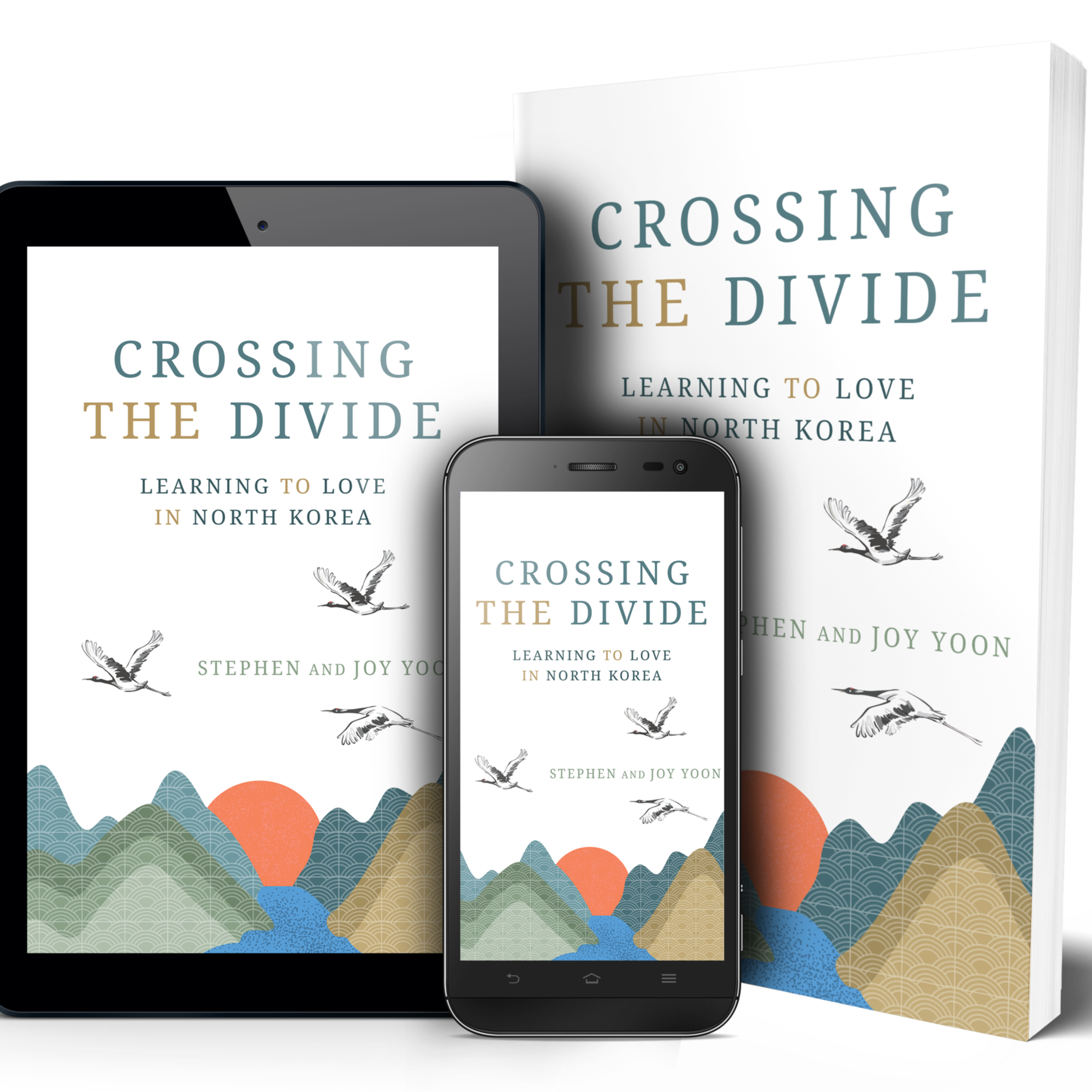
Stephen and Joy Yoon, the founders of Ignis Community (성양하나), recently published Crossing the Divide: Learning to Love in North Korea. The Yoons are fascinating people, by any metric, but their book title reveals their goal in writing this book – to share what their experiences in North Korea have taught them about how to love. As a Korean-American man, born in South Korea, and a White-American woman entering North Korea, they crossed significant lines of division. “Learning to love” is a lesson our world sorely needs, and I imagine many prospective readers would be intrigued by the idea that the authors learned this in North Korea (officially called the DPRK).

I bought an electronic copy of Crossing the Divide to read on my e-reader in late July, and I finished it last week. It was an easy read with bite-sized stories in 40 small chapters. After reading Joy’s earlier book, Discovering Joy: Ten Years in North Korea, I wanted to continue learning from this family’s experiences. I was not disappointed.
Not only has this couple been engaged in humanitarian activity in the DPRK for 17 years – activities as diverse as running a feeding program for children, providing chiropractic medical care to the elderly, overseeing construction of schools, launching a shoe factory producing snow boots to keep kids warm in the winter, and founding the first hospital in the DPRK to treat children with disabilities – but they did this in a tense political environment, facing personal opposition and mountains of US Treasury Department paperwork. In addition to all of that, they lived this lifestyle in a logistically challenging environment, as isolated, suspect foreigners for over a decade with their children.

In this intimate memoir, the Yoons introduce North Korean people with deep understanding and care. They relate the sense of purpose they felt in their work in the DPRK; the various fears, griefs, and insecurities they had to overcome; the myriad personal and organizational challenges they faced; the growth and change they experienced in their relationships with others; their humanitarian organization’s founding, program planning, funding, and development; and so many lessons they learned along the way. Whether you take avid interest in the DPRK or are a big dreamer wondering how to achieve your goals, in this book you’ll find amazing stories and meet forthright companions, willing to vulnerably retell their own journey for your encouragement.

Anyone interested in understanding more about the DPRK will glean many insights through their personal experiences and stories. I especially recommend this book to Christians, as the Yoons incorporate Christian scripture and reflections throughout the book, but I believe anyone who enjoys spiritual reflections and particularly peacebuilders, humanitarian workers, or practitioners of nonviolence will find this writing instructive.
You can get a copy of Crossing the Divide: Learning to Love in North Korea where books are sold or on loan.

 Seeds Will Grow
Leave a comment