

In June, Saleem Anfous joined the Christian Peacebuilding Network monthly meeting. As a Palestinian Christian and project manager for the peacebuilding organization Musalaha, he came to share about the challenges and opportunities of peacebuilding from the margins.
Saleem shared that empire* wants to silence voices on the margins – convince them that they are unheard and unvaluable. Yet, he has refused to accept that sense of self. Despite the fact that Christians make up a small percentage of the Palestinian population, he and others in his church in Bethlehem are committed to raising their voices, casting a vision for a different future, and using their resources to serve the common good.
Saleem works with youth in his church, and I wanted to hear more about how he works with them. I wonder how he instills in them a sense of their vital role and important voice as Palestinian Christians. I wonder how he empowers them to speak out and take action. I wonder how Palestinian Christians hear God calling them to respond at this point in history?
After Saleem shared, we split into smaller groups for discussion. I’m still reflecting on one insight that came up in our small group discussion. In a violent conflict, the dominant narratives and opposing sides set their sights on achieving their goals and defeating their enemy. Surely you recognize the frantic swirl to “take sides” in the current violence in Gaza. Are you pro-Israeli? Or pro-Palestinian? Any support for either side is generally equated to being anti-Palestinian or anti-Israeli.
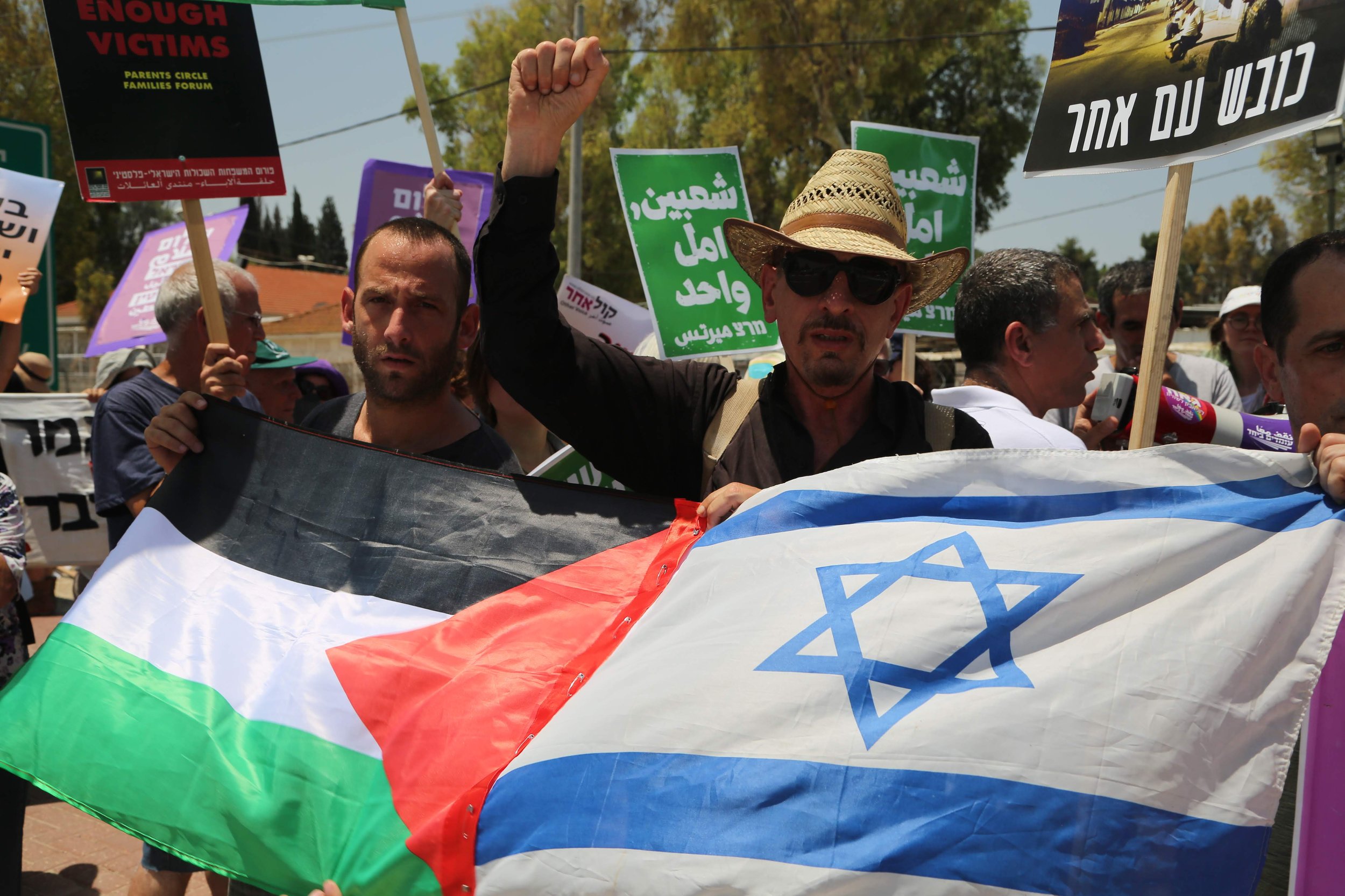
(A resource to explore if you need more empathy for parties in this conflict.)
The conflicting narratives are polarized, and like a door swinging on its hinges, this violence moves back and forth, along a defined trajectory. The conflict is locked in motion and guided by opposing forces. A cycle of violence.
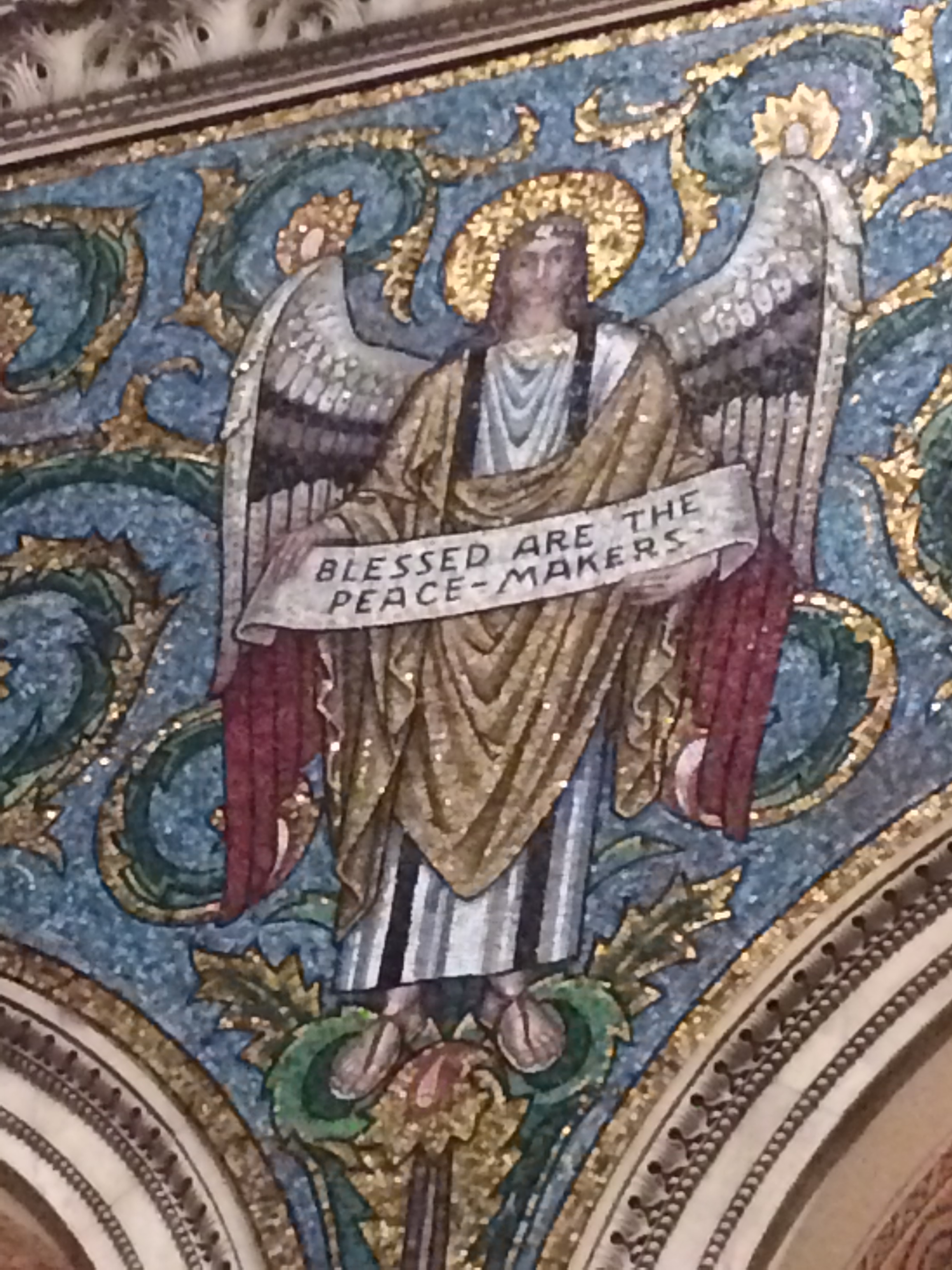
New narratives or nonviolent approaches coming from the margins of the conflict (i.e. Christian Palestinians calling out for the dignity of all people – rights of all people – the safety of all people – both Palestinian AND Israeli) can bring the necessary insight to shift the violent conflict’s current trajectory.
Imagine that door, vengefully swinging back and forth on it’s hinges, by the force of victim/victimizer violence. Now imagine that a wedge of some kind is inserted between the door and the door frame. The door will stop, and if force is continually applied on that door, the mere presence of this small, persistent wedge will cause the door to come off of its hinges entirely. This is the image through which I understood the power of nonviolent interruption or peacebuilding from the margins to break cycles of violence.
I left the call with Saleem wanting to hear more from and amplify voices like his. In that spirit, I offer you a list of resources compiled by Peace Catalyst staff for your exploration and perusal.
You can watch Saleem’s talk below:
* Empire is defined as “the coming together of economic, cultural, political and military power that constitutes a system of domination led by powerful nations to protect and defend their own interests.” (The Accra Confession, World Communion of Reformed Churches)
 Seeds Will Grow
Leave a comment